Updates
Company news, product updates, and posts from our social channels.
Grounded adjudication: The unnamed scarcity and what it means for Physical AI
Phoenix Astrid's Medium article "When Intelligence Becomes Free", published in January 2026, described AI intelligence as commoditizing toward zero cost, with attention becoming the last scarce human resource. Anyone who has used LLMs at depth has seen a different pattern: output that reads well at first glance, then reveals generic framing, insights that are off, references that are fabricated. Niva Platforms' September 2026 position paper, Free Intelligence Economics, names what is actually scarce: grounded adjudication - the capacity to evaluate whether an output is accurate, appropriate, reasonable, and competent. In the physical world, the stakes are far more significant. Niva examines native determinism as a solution to the scarcity problem in Physical AI.
Read more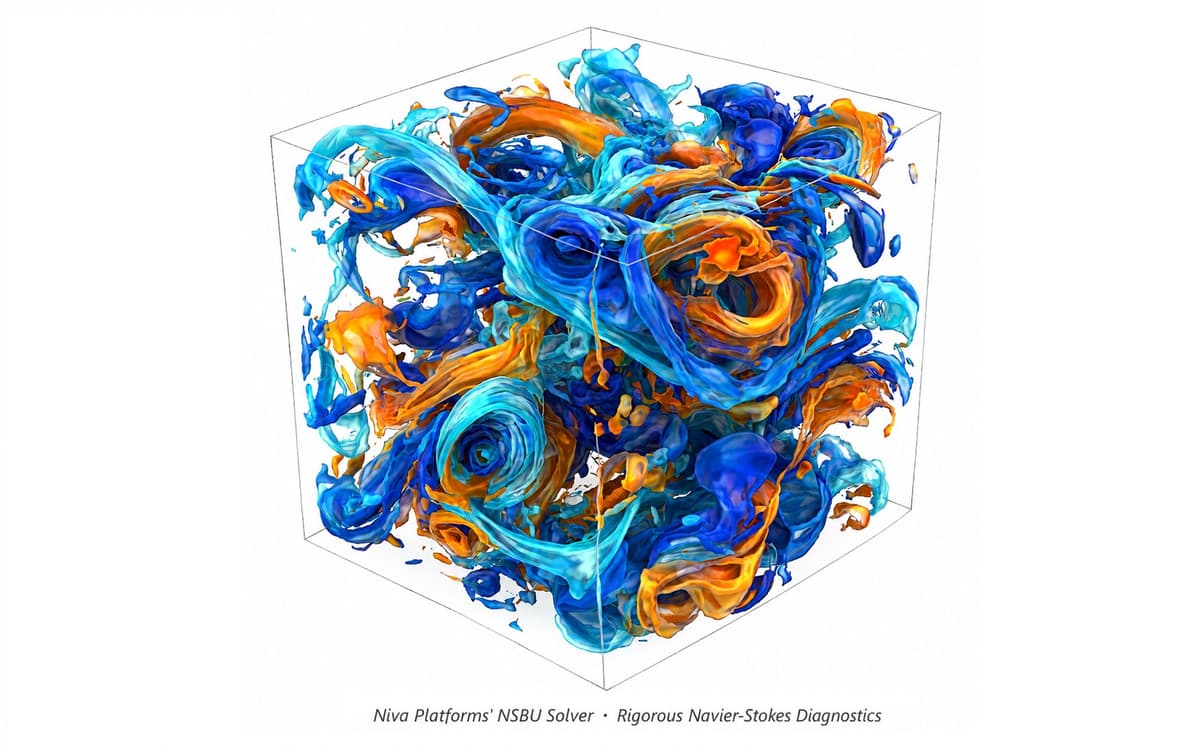
Navier-Stokes 2026: Niva publicly releases NSBU, highlighting architectural divergence in physical AI
Niva Platforms has publicly released NSBU, an open-source deterministic runtime for incompressible three-dimensional Navier-Stokes simulation, on GitHub. The release arrives at a moment of unusually high public attention on the Navier-Stokes equations, one of mathematics' seven Millennium Prize problems, following two AI-assisted proof announcements on 8 September 2026. Coverage described AI as having 'solved' it. The prize remains officially unclaimed, and the more important story is what the two approaches, and Niva's contribution, reveal about where AI in the physical sciences is actually heading.
Read more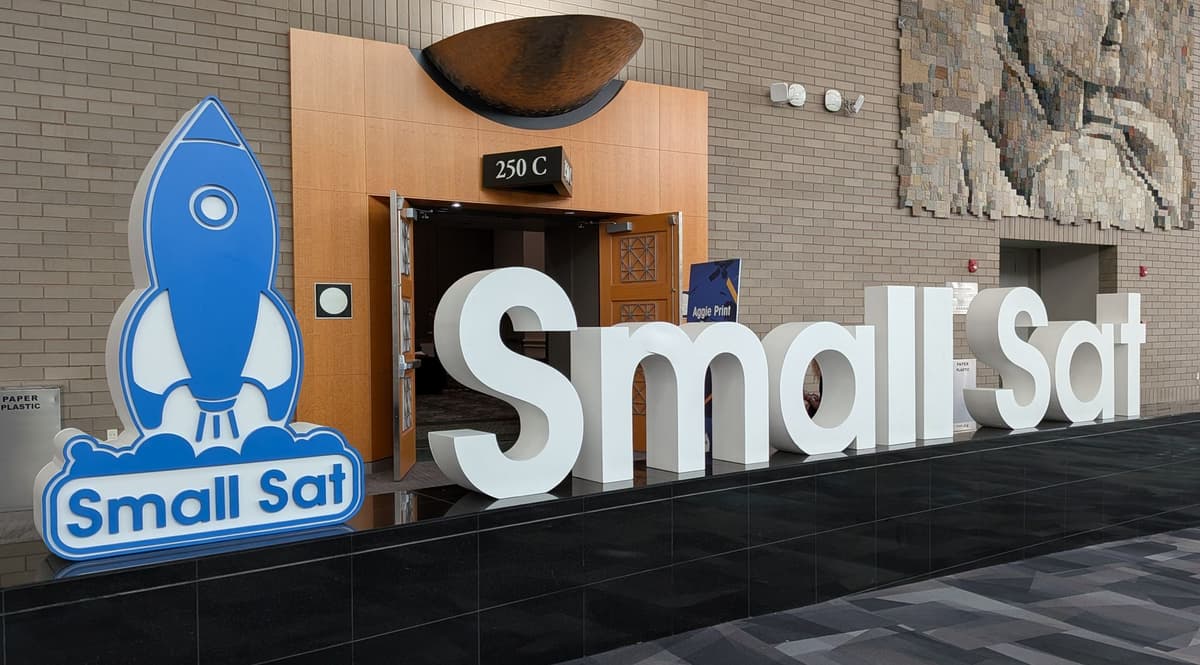
SmallSat 2026: Niva defines physics-native understanding and control for space operators
Niva attended the 40th Annual Small Satellite Conference in Salt Lake City (24-26 August 2026) with a clear architectural claim. Manifold is a runtime coupled physics engine: small, fast, edge-deployable, hyper-accurate, and end-to-end deterministic. It represents a class of architecture in which the operational computation itself is deterministic and runs continuously against a live world-state, and it opened conversations across the show floor with primes, government agencies, and university research groups working adjacent physics.
Read more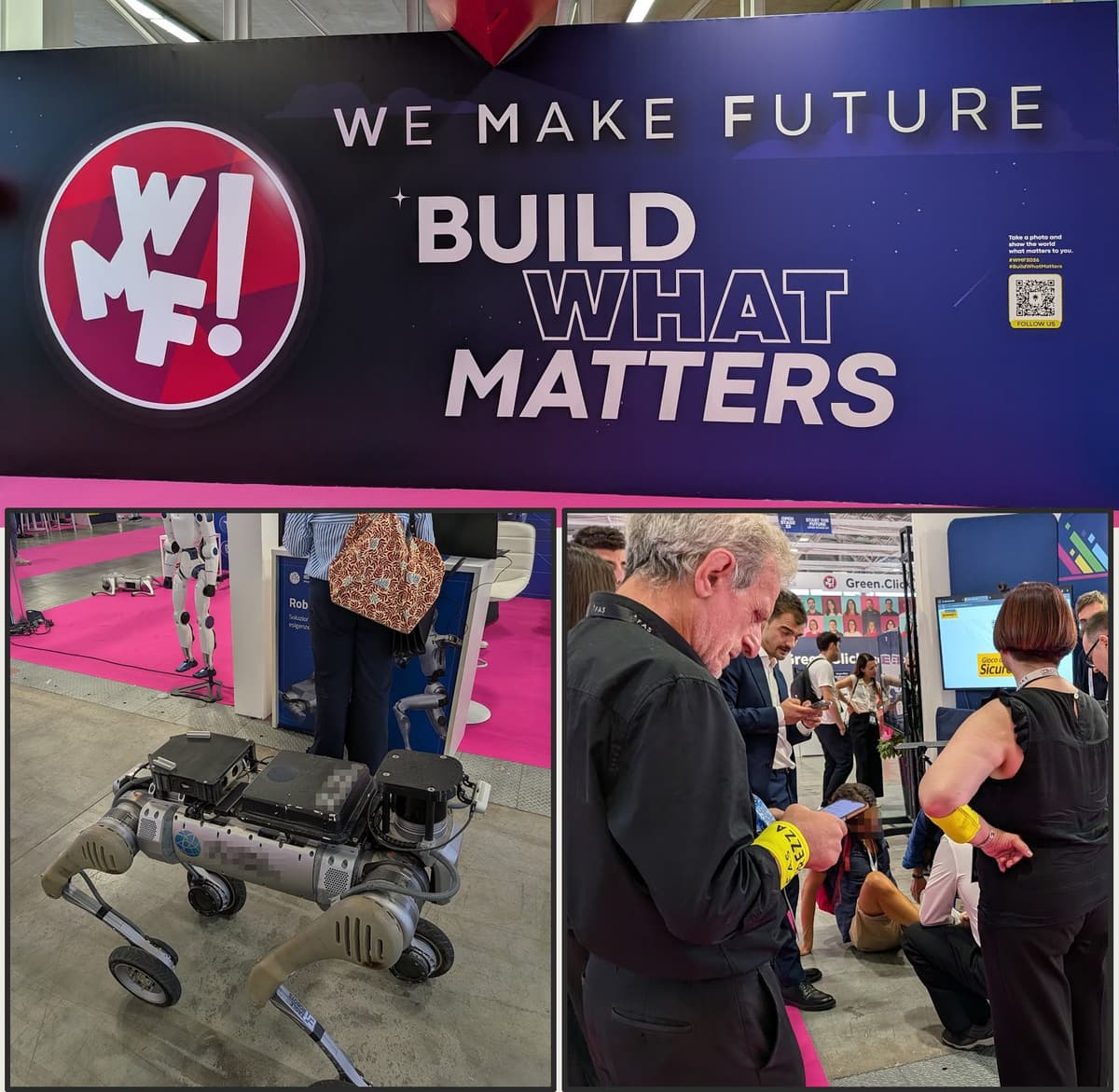
WMF Bologna 2026: Niva's physics-native approach to safety underscored in robotics and manufacturing
Niva attended We Make Future 2026 in Bologna (24-26 June) and witnessed a Physical AI failure firsthand: a commercial industrial quadruped lost control, deviated from its programmed circuit, and injured a pedestrian. The incident was not an anomaly. It was the predictable result of an architectural pattern the robotics industry has normalized, and visible across the WMF show floor.
Read more
Web Summit Vancouver 2026: Niva brings Manifold's runtime physics to cross-industry audience
Niva attended Web Summit Vancouver 2026 (12-14 May), introducing Manifold to a cross-industry audience of founders, investors, and enterprise buyers after a satellite-industry debut at SATShow in March. Conversations clustered around manufacturing, robotics, and materials discovery, with the runtime-versus-design-time distinction and a head-to-head comparison against Physical Intelligence's π0.5 as the recurring anchors.
Read more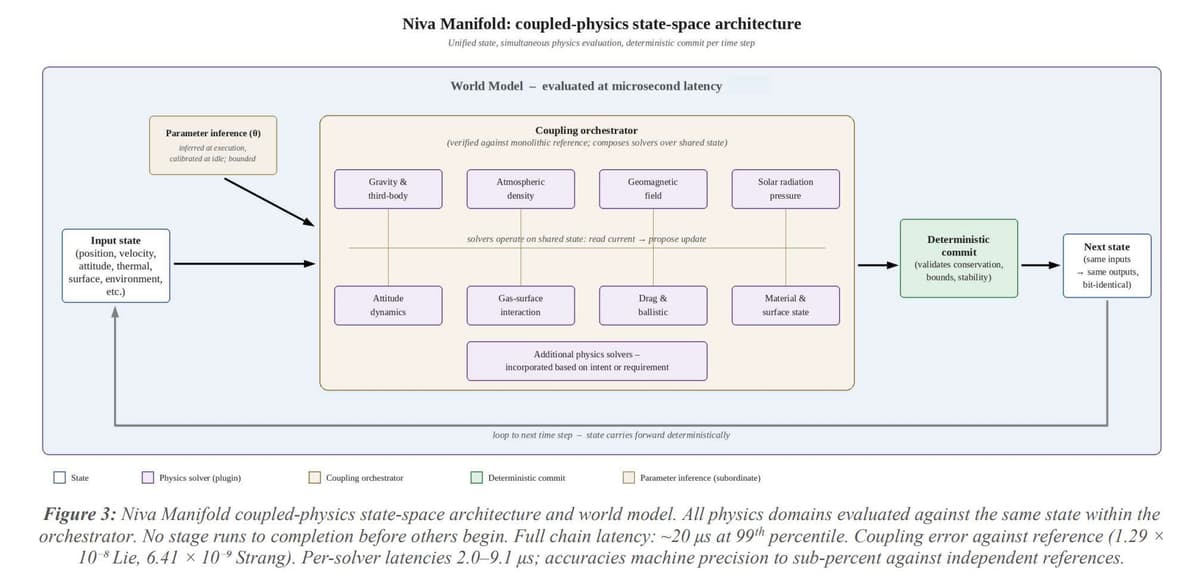
Closing the coupling chain: Applying Manifold's runtime physics to orbital state prediction
Object-specific orbital state prediction rests on a physics chain from material exposure through gas-surface interaction to ballistic behavior to orbit realism. The literature supports each link. It does not close the chain as a continuous runtime process. Niva's Manifold platform resolves the chain end-to-end at microsecond solver latency with deterministic commits - a world's first.
Read more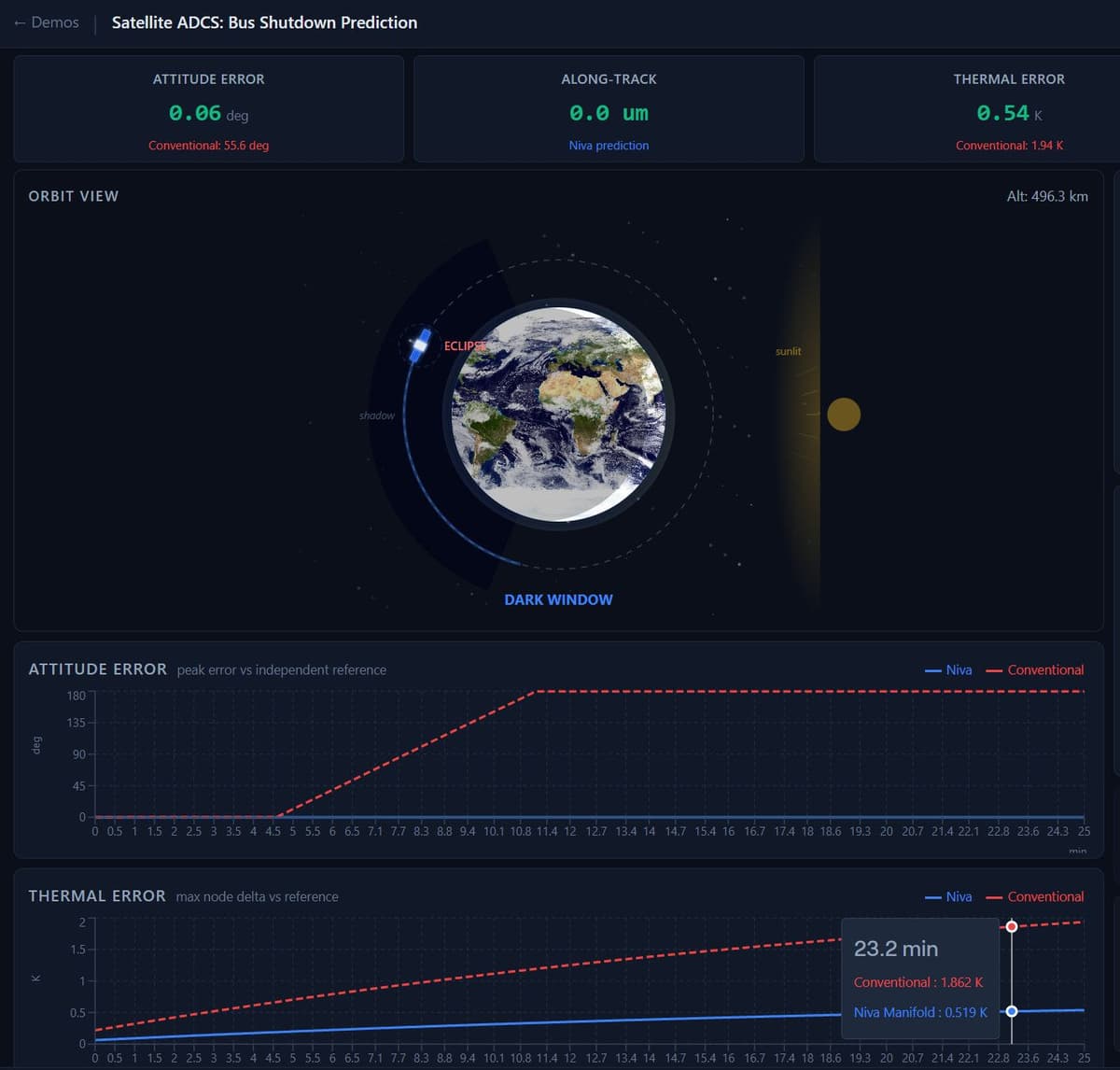
Demo: Satellite ADCS, bus shutdown prediction with coupled physics warm start recovery
Manifold predicts a satellite's attitude, orbit, and thermal state through a complete bus shutdown window, then hands the warm-start prior to ADCS recovery. Conventional cold-start recovery takes 5 to 12 minutes, sometimes longer. Manifold cuts it to under 2 minutes. Try it on the Demos page.
Read more
SATShow 2026: physics-native AI meets the satellite industry
Four days at SATShow 2026 in Washington, DC. Conversations with operators, manufacturers, ground segment providers, primes, and component suppliers across satellite, RF, and space domains. Deterministic AI that operates at runtime, sensor-fused, on edge hardware, without training data, while retaining exceptional accuracy.
Read more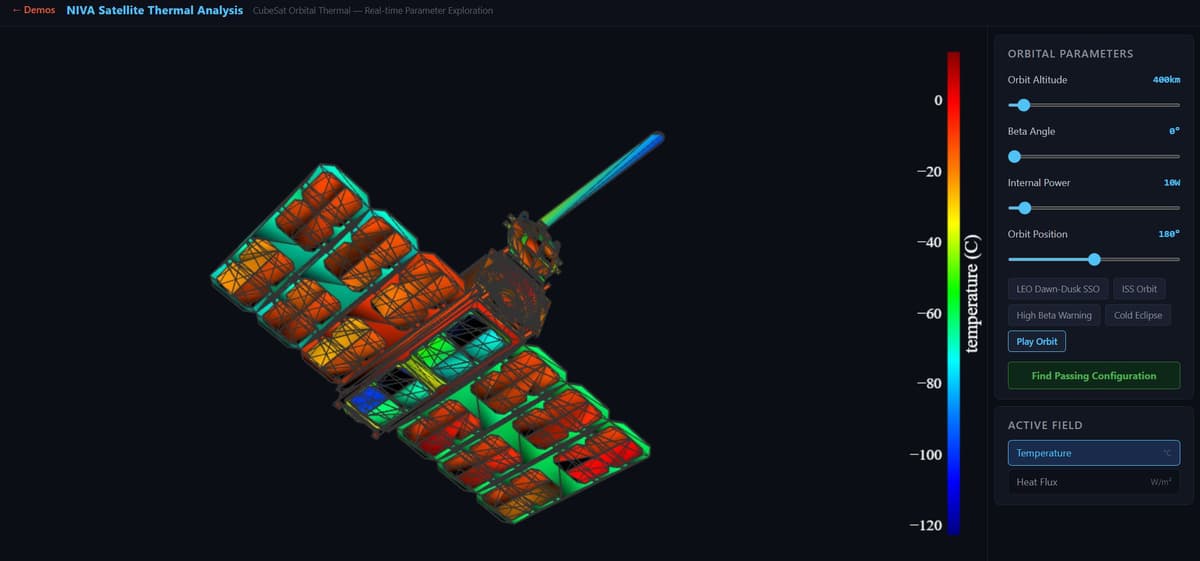
Demo: Satellite Thermal Analysis, real-time orbital thermal at 43ms
Manifold computes the full multi-physics thermal balance for a CubeSat in low Earth orbit, solar heating, Earth IR, albedo, internal dissipation, and radiative cooling, in 43 milliseconds. Thermal Desktop and ESATAN take 4 to 8 hours for the same calculation. Try it on the Demos page.
Read more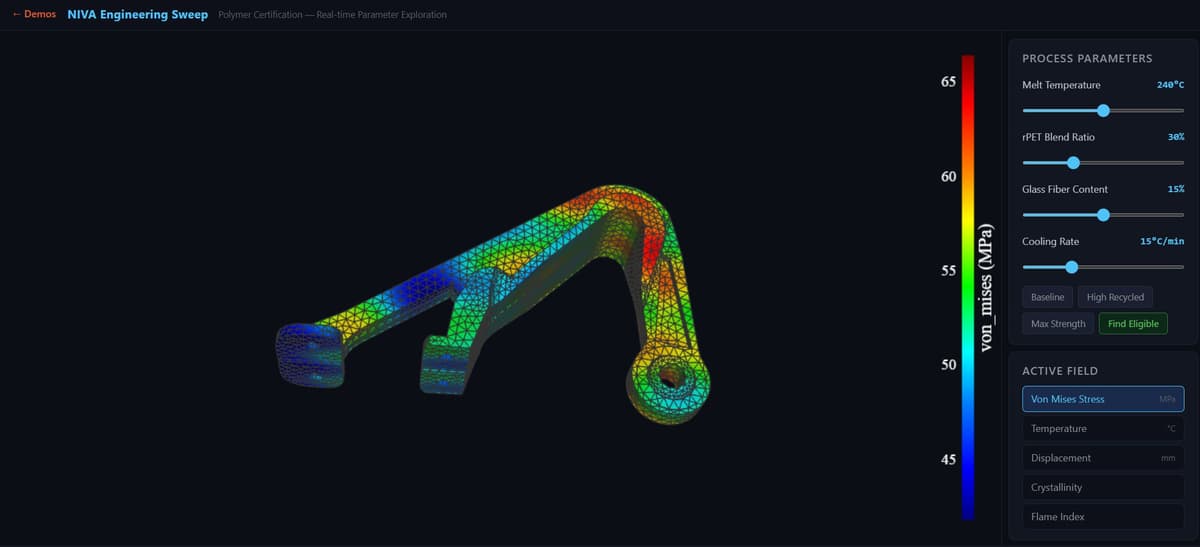
Demo: Engineering Sweep, real-time polymer certification at millisecond latency
Manifold computes the full physics prediction for a recycled polymer composite part, stress, temperature, displacement, crystallinity, and fire resistance, in 143 milliseconds. Conventional offline simulation often takes hours to days for the same calculation. Try it on the Demos page.
Read more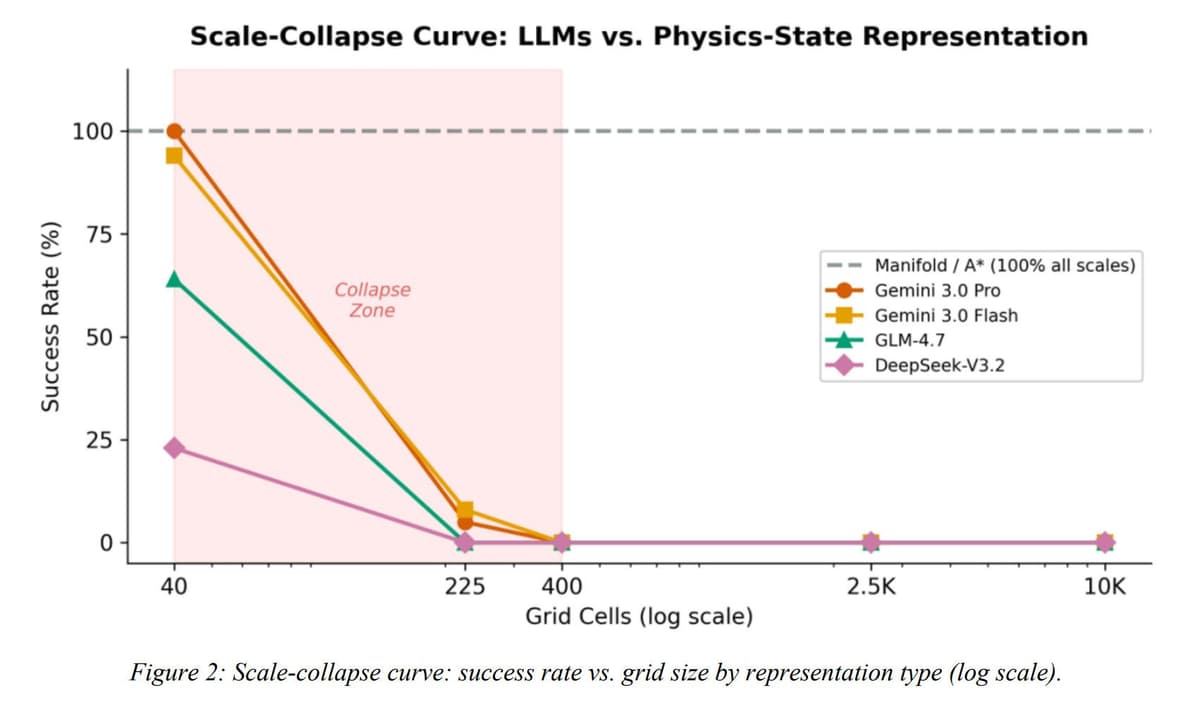
Why LLMs can't do spatial reasoning at scale, and what models can
Across 11 frontier LLM variants tested on grid navigation, every model collapsed to 0% by the size of a bathroom. Manifold and classical graph search hit 100% on a 50,000×50,000 grid (2.5 billion cells, 25 square kilometers at 10cm resolution) on a single consumer GPU. The phase transition is architectural, not a training problem.
Read more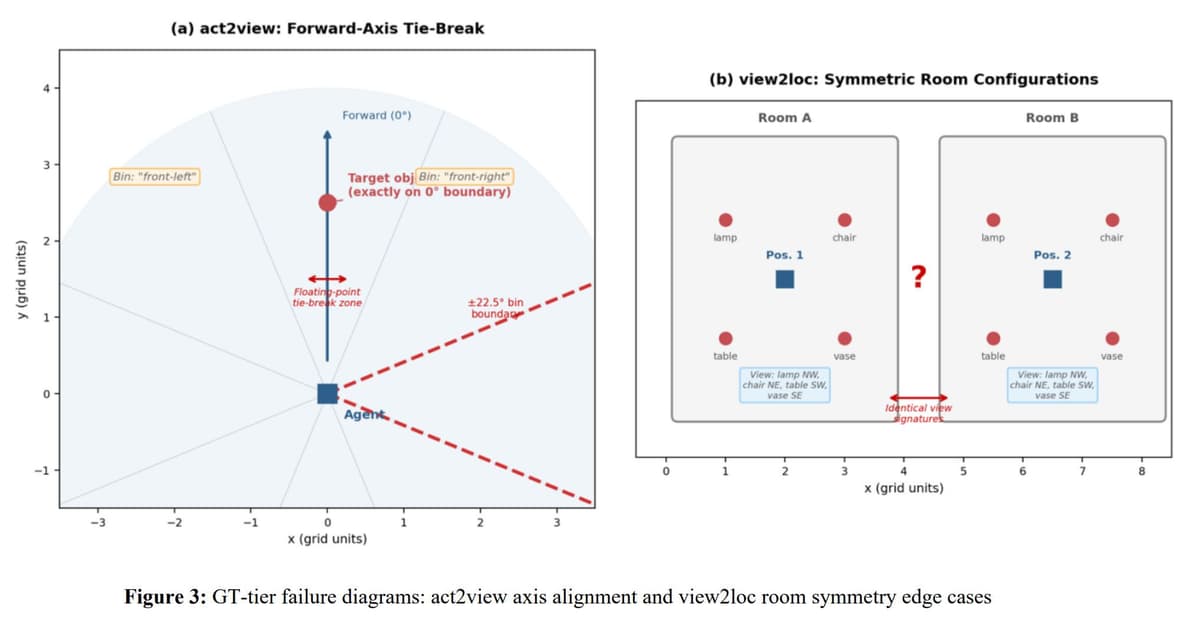
Manifold on Theory of Space: 97% accuracy with structured sensor input, where frontier LLMs collapse to 4-10%
On Stanford and Northwestern's Theory of Space benchmark (ICLR 2026), Manifold reached 97% accuracy with structured sensor input, against 72% for GPT-5.2 and 66% for Claude-4.5 Sonnet on text input. When the same structured sensor data was given to the LLMs, their accuracy dropped to 4-10%. The first non-LLM system evaluated on the benchmark.
Read more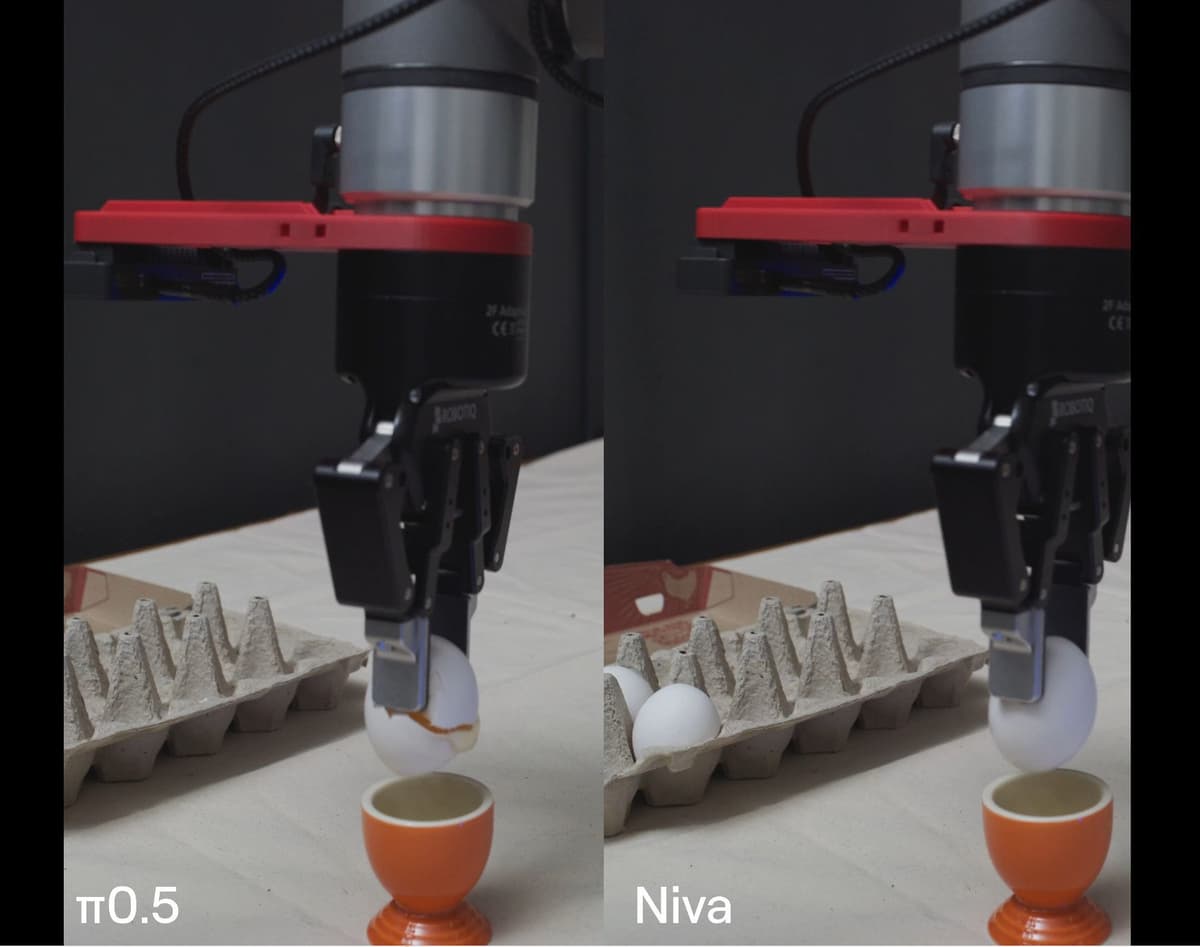
Head-to-head: Manifold vs Physical Intelligence on identical hardware
On identical UR5e hardware and the same contact-rich manipulation task, Manifold reached 98% success against 14% for Physical Intelligence's π0.5. Zero-shot, no training. Manifold ran at 60 Hz; π0.5 at 4.4 Hz.
Read more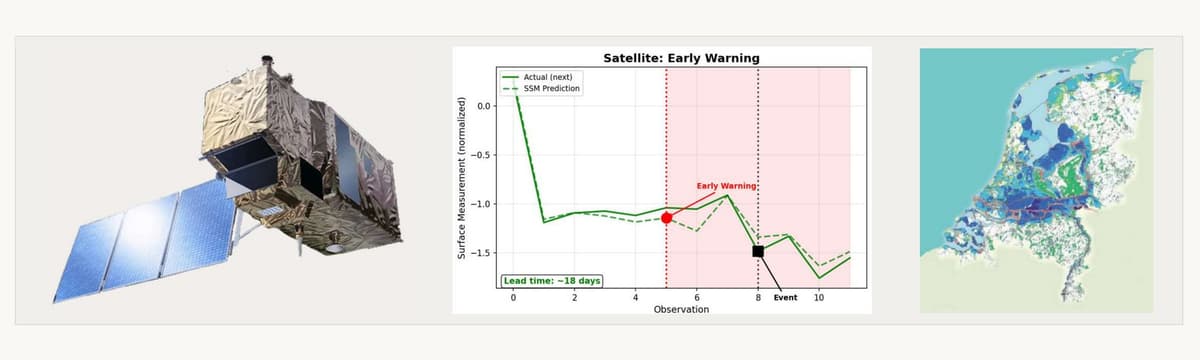
Predicting coastal flooding in the Netherlands with satellite data
Using historic ESA Sentinel-1 and Sentinel-2 imagery over a 10km stretch of the Dutch coast, Manifold processed 59 SAR and 13 optical observations through the same architecture that runs our robotics work, producing roughly 18 days of lead time on coastal anomaly signals.
Read more